
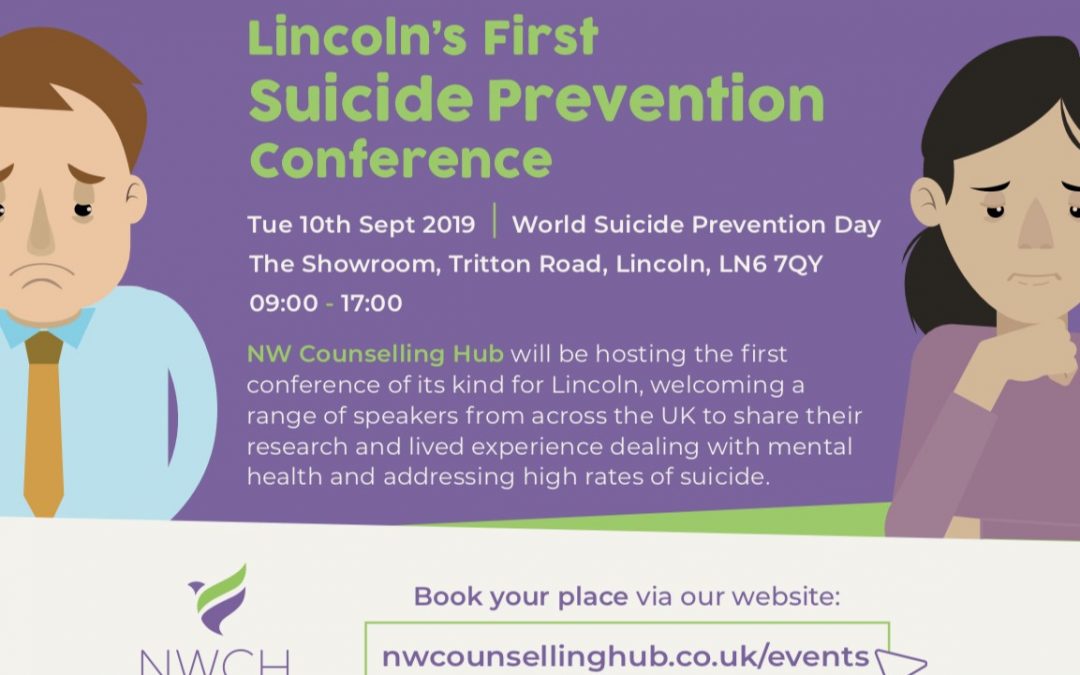
On September the 10th across the world organisations and communities will be coming together to raise awareness of how we can create a world where fewer people die from suicide.
In Lincoln on the 10th I will be at the Showroom joining NWCH as a key note speaker talking about the suicide crisis and the effects it has on front line Ambulance crews. To book a place or learn more about this event please visit http://www.nwcounsellinghub.co.uk/events
In 2017 in the UK 5487 people took their own life. That’s just over 15 people every day! The amount of people who attempt suicide is thought to be 10 – 25 times higher than the yearly figure – which is staggering!
As a comparison, in 2017 in the UK 5487 completed suicide and only 1770 died as a result of a road traffic collision, these figures are simply shocking.
We know that a good 75% of all UK suicides are of men and the highest rate are men aged 45 – 49. Why is this?…….. This is purely my own opinion but I am lead to believe that stigma and masculinity is a huge part of this and that men are more reluctant to seek help. We do know for a fact that only 28% of people who complete suicide have been in contact with mental health services, is this because they don’t ask for help, don’t know its available or feel shame that they feel like this?
The statistics for men are staggeringly high however in 2017 it showed yet another drop in rates of men completing suicide and in fact the statistics show we are at the lowest in over 30 years! So we must be doing something right surly. We do however have a problem in Scotland as for the 3rd consecutive year in 2017 there has been an increase in young men completing suicide, why do you think this is?
Lets look at warning signs that you might be able to spot:
- Hopelessness, Helplessness, shame, guilt, anger and rage
- They feel they have no way out
- Dramatic change in their appearance – better or worse
- Withdrawing from friends, family or social events
- Drop in work performance
- They have no sense of purpose in life
- They have all of a sudden put their affairs in order
- Sudden unexplained recovery
How can we help someone feeling like this?
Lets start by helping reduce the stigma involved in mental ill health, lets encourage help seeking but not give advice. We can provide support in the form of ears to listen or a shoulder to cry on. People struggling with mental ill health often just need to talk and work through things and the best thing we can do is simply give them hope. Hope can be the light at the end of the tunnel.
There are lots of events you can attend to learn more about mental health. Please visit the course page on this website to look at all up and coming course.